
Your Customer Has Changed. Has Your Brand?
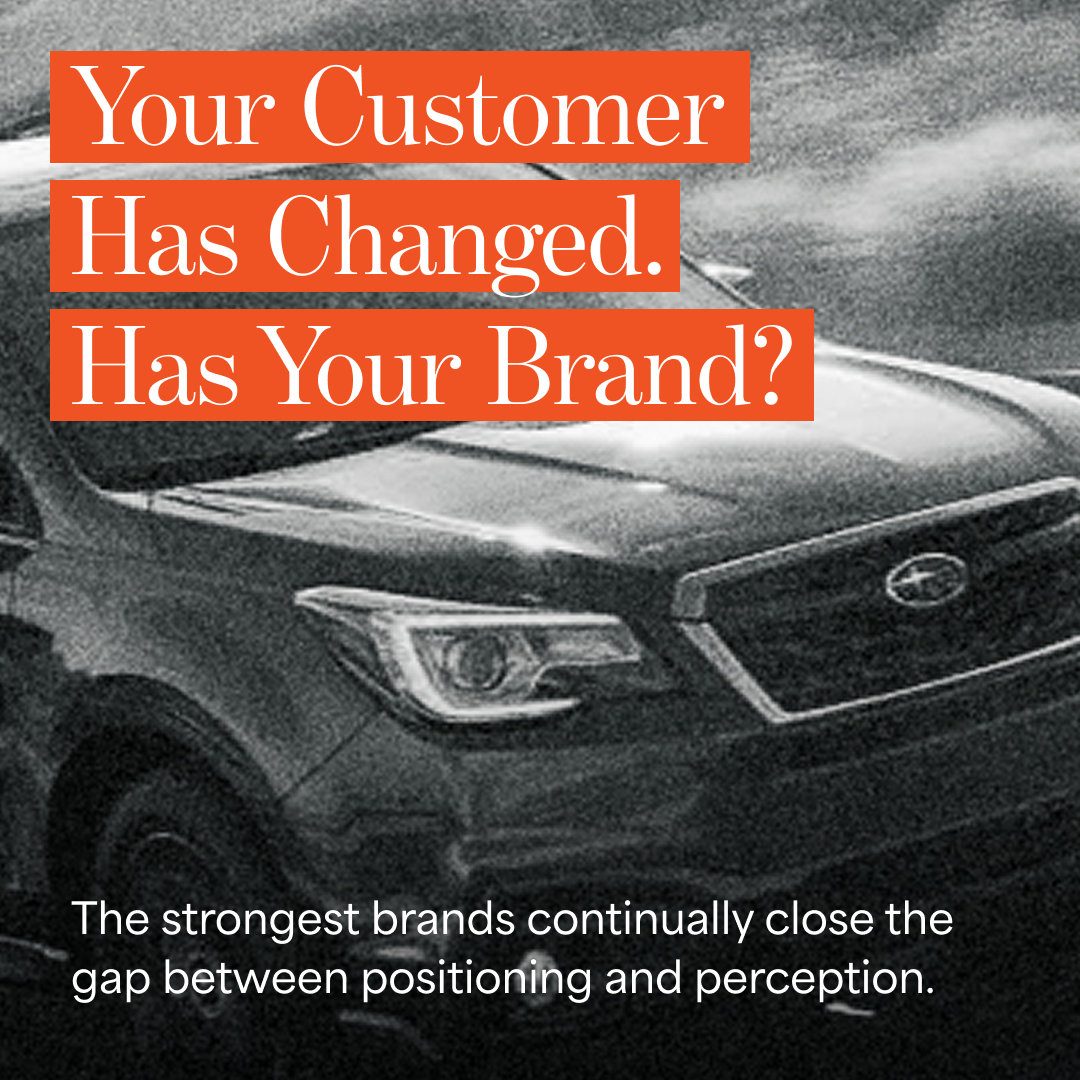
Brands have more customer data than ever before. AI promises hyper-personalization. Algorithms can predict what people want before they search for it. Yet many companies are still making strategic decisions based on customer personas that haven't been challenged in years.
As management expert Peter Drucker said, "The purpose of business is to create and keep a customer." Today, keeping that customer means recognizing when they've changed.
People's priorities shift. Media habits evolve. Life stages, economic realities, and cultural conversations reshape what people value and why they buy. The customer your brand was built for may not be the one driving growth today.
That's why one of the biggest risks facing brands isn't losing sight of the competition. It's losing touch with the customer. The strongest brands continually close the gap between how they want to be perceived and how customers actually see them.
Here are five signs your audience may not be who you think they are.
1. You haven't done a customer persona pulse check in years.
Customer personas have a tendency to become organizational folklore. They get referenced in presentations and creative briefs as if they're preserved in amber. Meanwhile, customers have moved on.
The brands that stay relevant are willing to question their assumptions instead of mistaking familiarity for accuracy. Sephora has done this exceptionally well. While the brand built its reputation with beauty enthusiasts, it has continually expanded its understanding of its audience by embracing younger shoppers, skincare-first consumers, men, and a growing multicultural customer base.
Don't wait for a new CMO or a rebrand to dust off your personas. Make sure you know who you're talking to right now.
2. You're measuring the wrong metrics.
Are you measuring awareness or perception? Awareness is relatively easy to build and even easier to celebrate. But recognition and reputation aren't the same thing.
Ask customers what words they associate with your brand. What problem do they believe you solve? What role do you play in their lives? If their answers don't match the story you're telling, the problem isn't your messaging. It's your understanding of the customer.
Subaru famously discovered it had become a favorite among lesbians and embraced that insight as a strategic advantage. Paying attention to perception uncovered an opportunity. It might do the same for you.
3. You aren't listening to your fastest-growing segment.
Listening to your most engaged customers is essential. But it can also create blind spots. Your next opportunity often comes from people who aren't in your loyalty program or commenting on Instagram.
Look at who's buying more often than they were a year ago. Pay attention to customers entering from adjacent categories or unexpected channels.
Growth often shows up in behavioral shifts long before it appears in quarterly reports. If you're only listening to your loudest audience, you may be missing the customers shaping your future.
4. Internal consensus has replaced customer listening.
Every company says it's customer-centric. Yet inside many organizations, conversations about the customer happen almost exclusively with other employees. Teams workshop messaging, debate personas, and refine positioning based on outdated research or, worse, executive intuition.
The most valuable customer insights don't come from conference rooms. They come from social comments, customer service conversations, product reviews, Reddit threads, search behavior, one-on-one interviews, and ongoing brand tracking. That's where people reveal what's motivating them, what's frustrating them, and how they actually perceive your brand.
Make it a habit to bring those voices into strategic conversations. Before approving a campaign or refining your positioning, ask one simple question: What evidence from actual customers supports this decision?
If the call is coming from inside the building, it might be time to pick up another phone.
5. You're treating customer research like an annual event.
Customer research shouldn't be something you dust off every few years before a rebrand or seasonal campaign. Markets don't evolve on that schedule, and neither do customers.
Ongoing brand tracking isn't just about measuring past performance. It's about spotting changes before they become business problems. It helps you identify shifting perceptions, emerging competitors, changing customer priorities, and weakening emotional connections while there's still time to respond.
The strongest brands don't wait for declining sales to tell them something is wrong. They're already listening.
Your positioning isn't static. It either evolves with your customers or slowly drifts away from them. The question isn't whether your audience has changed. It's whether your brand has kept up.
We can be your objective lens, helping you close the gap between your positioning and your customers' perception.
Let's work together.
SOURCE
NPR, Planet Money — ”When Subaru Came Out (Classic)”